

From 19 to 30 October 2026, the RESPIN team took part in the UN Biodiversity Conference (CBD COP17) in Yerevan, Armenia, contributing to more than ten sessions on how science and diverse forms of knowledge can better inform biodiversity and climate policy.
COP17 marked the first global review of progress under the Kunming-Montreal Global Biodiversity Framework (GBF). For RESPIN, which works to reinforce science-policy interfaces for biodiversity and climate, this made it a key moment to share what we have learned so far: about who takes part in IPBES and IPCC processes, how their outputs reach decision-makers and what helps knowledge turn into action at EU, national and subnational levels.
Connecting climate, biodiversity and land
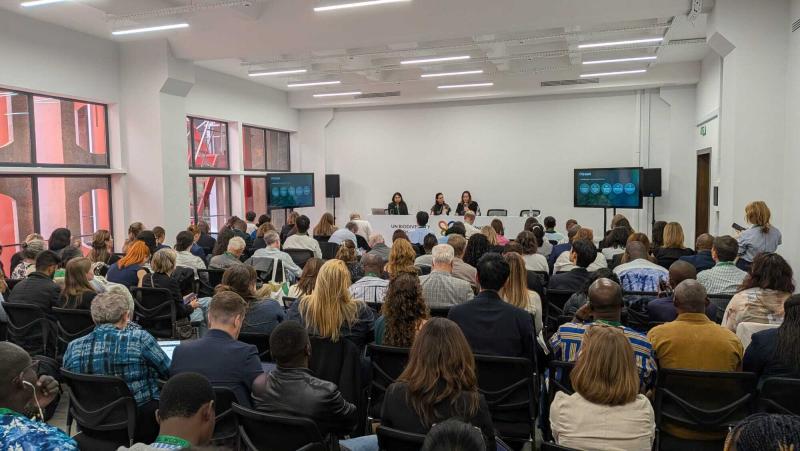
On 22 October, RESPIN joined the side event "Connecting Climate, Biodiversity and Land: Synergies among the Rio Conventions in the EU context", hosted by CREAF together with IAvH, FRB, ICLEI Europe and UNEP-WCMC, alongside the Horizon Europe projects CO-OP4CBD and NetworkNature.
The session looked at how the CBD, the UNFCCC and the UNCCD can work together instead of in parallel, and at the role science-policy interfaces can play in breaking down institutional silos. Discussions focused on better policy alignment and integrated approaches, such as nature-based solutions, that deliver benefits across all three agendas. The room was full, with many participants following the discussion standing.
Regional voices: Eastern Europe, the Caucasus and Central Asia
Supporting underrepresented regions is central to RESPIN's work, and two sessions brought this focus to Yerevan.
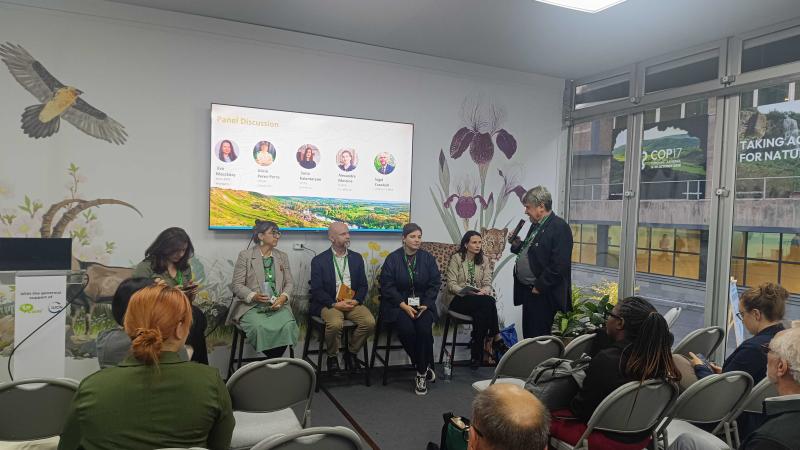
On 22 October, the interactive workshop "Stakeholder Engagement with IPBES: Regional Perspectives from Eastern Europe and Central Asia" in the Green Zone brought together IPBES leadership and assessment authors, regional biodiversity platforms, the Calouste Gulbenkian Foundation, the Institute for Biodiversity Network (IBN) and Armenian practitioners. Participants explored how experts from the sub-region can engage with IPBES and help bring its assessments into national and regional policy.
On 23 October, BES-Net, the ECA Network and RESPIN hosted "Bridging Knowledge, Policy & Action for Biodiversity and Climate" at the FPWC Pavilion. The event shared lessons from the BESPIN Regional Trialogue for Europe and Central Asia, held in Skopje, North Macedonia, in May 2026. Panellists from HUN-REN, CREAF, FPWC, GYBN and UNESCO-LINKS discussed how IPBES and IPCC knowledge can move faster into policy across the region.
The trialogue's results are captured in the BESPIN Action Document, which sets out six regional action pathways and twelve country-specific priorities for national follow-up, regional cooperation and peer learning.
The 7th Science-Policy Forum for Biodiversity
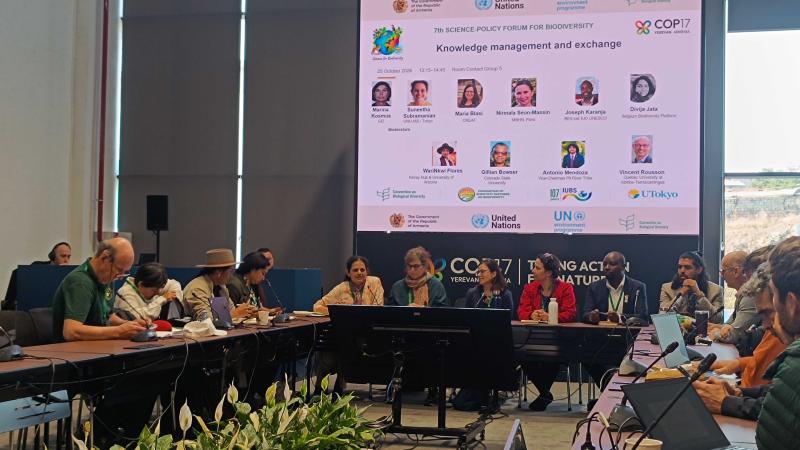
On 24 and 25 October, RESPIN contributed two talks to the 7th Science-Policy Forum for Biodiversity, organised by the International Union of Biological Sciences during COP17.
- On Saturday, project coordinator Yves Zinngrebe (UFZ) spoke in the session "Nexus in practice: Mainstreaming and landscape governance", sharing insights on engaging actors across sectors and levels through accountability.
- On Sunday, Divija Jata (BELSPO) discussed the barriers and opportunities for including knowledge holders in IPBES and IPCC processes, drawing on findings from the RESPIN dialogues.
The talks built on RESPIN's analysis of expert engagement with IPBES and IPCC in Western and Eastern Europe, Central Asia, Colombia and the Democratic Republic of Congo.
From science to negotiations
On 27 October, two sessions turned to how research can feed directly into the negotiations and the GBF review.
The side event "Bridging science and negotiations: how to develop briefs that matter?" brought RESPIN together with FRB, IUCN, Conservation International, the French Ministry for Ecological Transition, naturalsciences.be and our sister projects. The panel shared practical experience of turning research into concise, timely and policy-relevant input for negotiators.
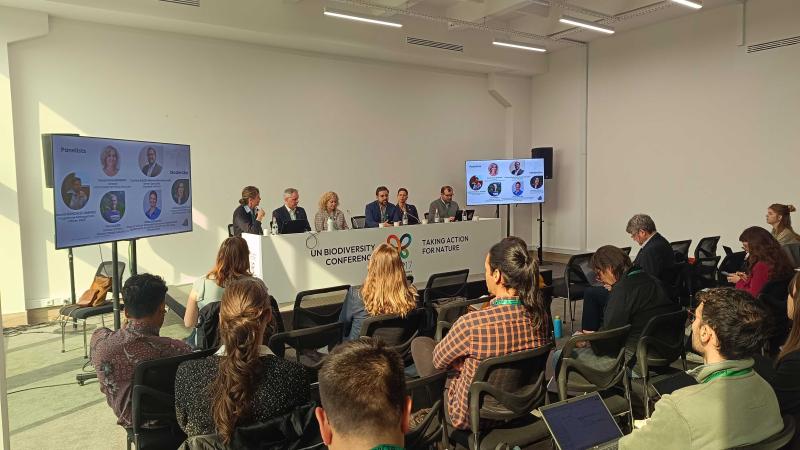
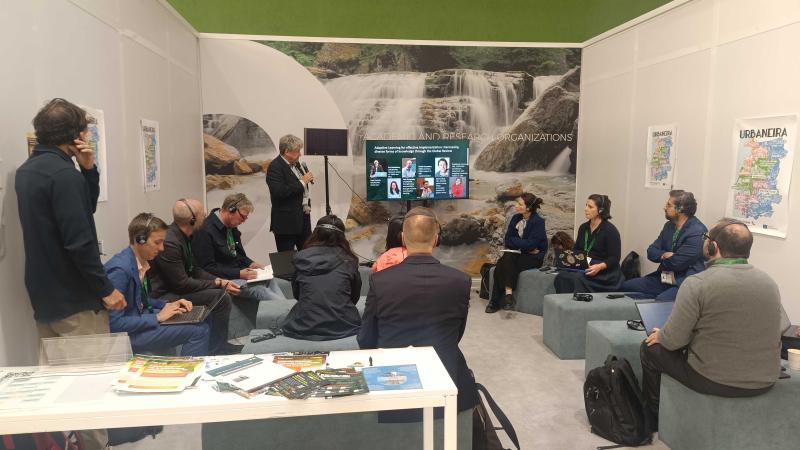
Later that day, RESPIN partners held an informal session at the Academic and Research Action Hub on how diverse forms of knowledge can strengthen the GBF Global Review. Moderated by Axel Paulsch (IBN), it featured:
- Eva Macskasy (Centre for Ecological Research), on insights into the national uptake of IPBES and IPCC knowledge
- Yves Zinngrebe (UFZ), on how science and evaluation can support accountability in implementing the GBF
- David Gonzalez (IPBES), on how IPBES outputs support GBF implementation
- Marcel Kok (PBL Netherlands Environmental Assessment Agency), on how science and other knowledge can complement the existing global review
The discussion highlighted that the review can draw on far more than national reports, from IPBES assessments to the knowledge of Indigenous Peoples and local communities, citizen science and non-state actors.
National action and knowledge holders
On 29 October, RESPIN was in two places at once.
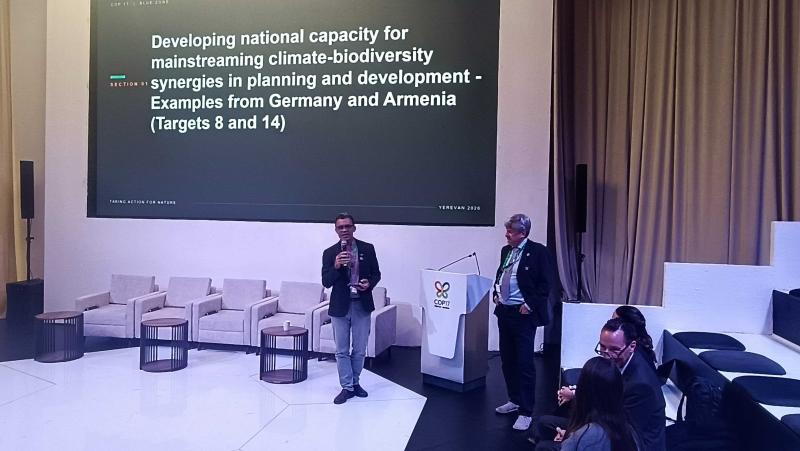
At the Armenia Pavilion, IPBES Chair David Obura opened "Developing national capacity for mainstreaming climate-biodiversity synergies in planning and development: Examples from Germany and Armenia". Axel Paulsch (IBN) and Eva Macskasy (Centre for Ecological Research) shared RESPIN insights on bringing IPBES and IPCC knowledge into national planning, linked to GBF Targets 8 (climate and biodiversity) and 14 (mainstreaming).
At the same time, at the Data to Action Pavilion, the session "From knowledge to action: empowering knowledge holders to engage in environmental and science-policy processes" explored how to help more experts take part in processes like IPBES and IPCC.
Every day at the EU Science for Biodiversity Booth
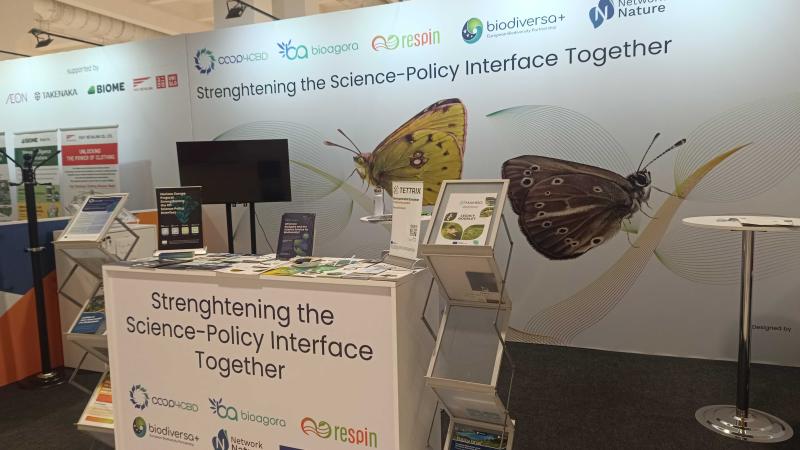
Throughout both weeks, RESPIN shared the EU Science for Biodiversity Booth in the Blue Zone with our sister projects CO-OP4CBD, BioAgora, Biodiversa+ and NetworkNature, under the shared motto "Strengthening the Science-Policy Interface Together". The booth hosted daily themed sessions, project presentations and many informal conversations with delegates, researchers and practitioners.
On 23 October, the project coordinators presented their contributions at a press conference streamed on UN Web TV: "Taking Action for Nature through Strengthening the Science-Policy Interface: Lessons from EU-funded Projects". RESPIN outlined its work strengthening the links between science and the IPBES and IPCC processes, alongside CO-OP4CBD's support for European experts in the CBD and BioAgora's Science Service for Biodiversity.
Looking ahead
COP17 confirmed how much interest there is in better connecting science, policy and practice, and that this work is best done together. RESPIN will carry the conversations and contacts from Yerevan into its next steps: developing new science-policy formats for integrated IPBES and IPCC processes, training and online capacity building, and action agendas with strategic partners.
A warm thank you to the RESPIN team in Yerevan, our partners and co-hosts, all the speakers, and everyone who visited the booth, joined a session or asked a question.
Stay tuned: in the coming weeks, we will publish follow-up articles taking a closer look at the individual sessions and their key takeaways.
All RESPIN results, from reports to policy recommendations, are openly available at our Project results page.